a quick examination of Los Angeles and São Paulo and their polarizing effect on urban space.
Our built environments can make or break us. They shape us, and we shape them. Dualism is rooted in the associations we create as humans and the meanings we attach to the places we inherit. We all know this because we experience public space daily. A walk along a busy thoroughfare might well be uncomfortable without a healthy assortment of mixed-use developments and green space to encourage human activity. However, space and place move beyond the simple meanings people contribute to them.
As my professor of Public Health, Jason Corburn, mentions in his book Toward the Healthy City, “Healthy places ought to be understood as being doubly constructed: physically (the buildings, streets, parks, etc…) and socially (through the assigning of meanings, interpretations, and narratives…). This relational view highlights the processes that simultaneously connect the material, social, and political and ultimately turn a physical spot in the universe into a place.”1 In other words, we cannot create a healthy place without a balanced assortment of accessible infrastructure AND a sense of place that makes the site, and its cultural relevance, unique and special to those who use it.
However, while I want to include my thoughts on how we can create places that can handle both the physical and social demands of what sustains a healthy city, I want to focus today on a pervasive issue that is choking the working classes and contributing to massive inequality within our cities worldwide.
The growing erasure of the public realm should ALARM you. Consistent with trends of American urban renewal in the mid-50s, public space has been infiltrated with privatization. We know the fracturing effect cars impose on the streetscape, so I won’t mention them here. Rather, I want to shed light on another component of the neo-liberal city framework that is dramatically shifting the public realm into an exclusionary space.
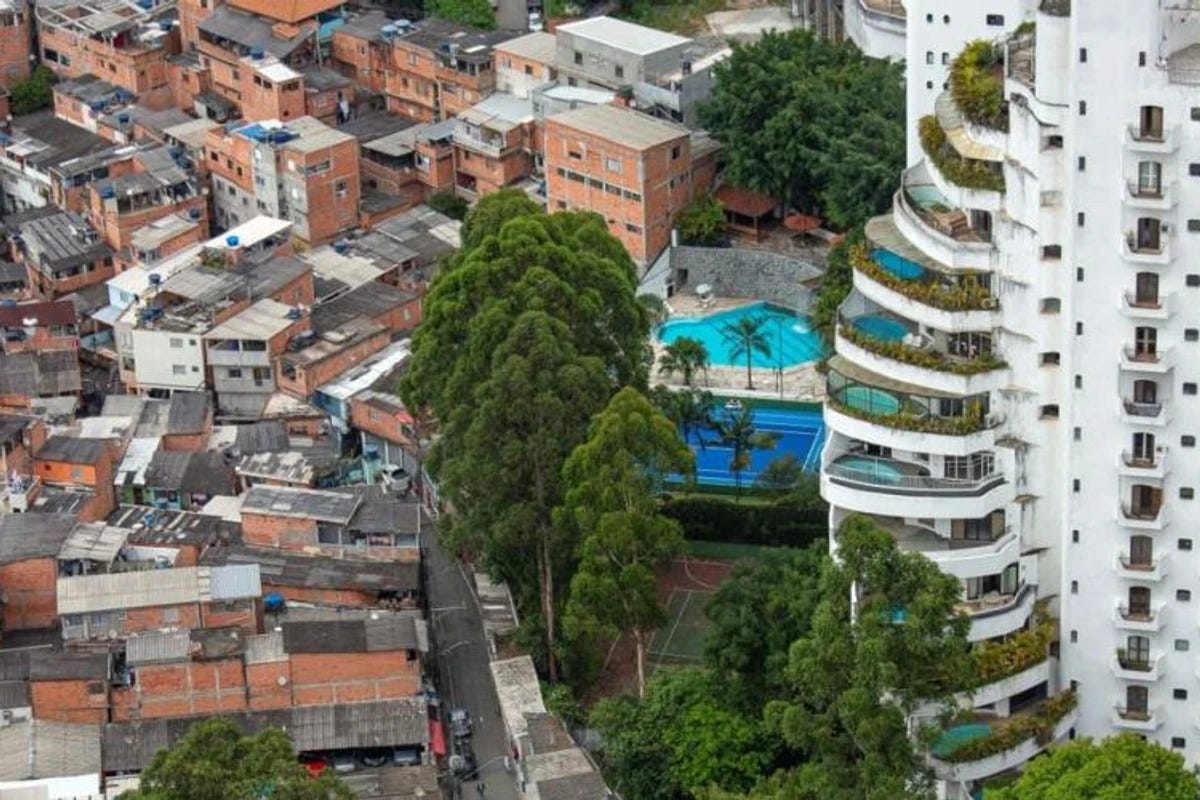
The glaring prioritization of capital is perhaps no more obvious than in São Paulo and Los Angeles. In Fortified Enclaves: The New Urban Segregation, Teresa Caldeira elucidates these two cities’ blatant, privatized, and exclusionary urban morphologies. In the past decades, “the physical distances separating rich and poor have decreased at the same time that the mechanisms to keep them apart have become more obvious and more complex.”2 These mechanisms come in many forms but are most often represented through physical barriers: high walls, fences, and armed security.
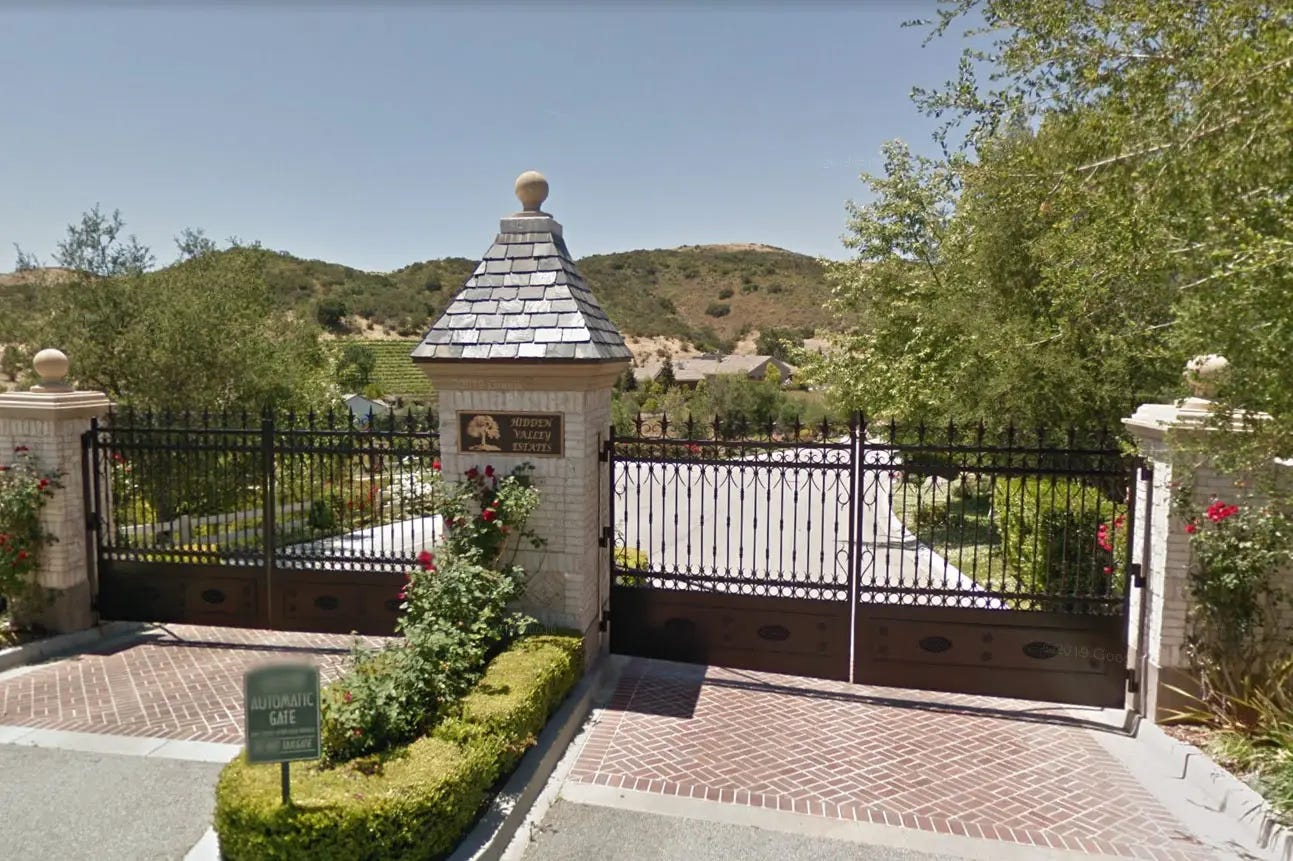
Los Angeles, in a similar facet, has become a blueprint for the consequences that arise within a capitalist spatial structure that militarizes and dominates urban space. Contrary to São Paulo, Los Angeles is home to some of the most distinct physical divisions between the wealthy and the working class. As Edward Soja writes in Postmetropolis: Critical Studies of Cities and Regions, “In so many ways, Los Angeles is the place where ‘it all comes together,’ to borrow the immodest slogan of the Los Angeles Times.”3 Concentrated areas of wealth and poverty make up the demographic structure of the city, creating wealthy enclaves and militarized, impoverished pockets simultaneously. As Mike Davis writes in City of Quartz, “…we live in ‘fortress cities’ brutally divided between ‘fortified cells’ of affluent society and ‘places of terror’ where the police battle the criminalized poor.”4 Consequently, the public realm is incessantly repressed, similar to São Paulo. Gated communities are isolated, armed by security, and closed off to the street through the landscape and hostile architectural implementation. Increased surveillance within wealthier neighborhoods is also symbolic of the militarized nature of Los Angeles’s development. The exclusive nature of this development not only prioritizes private interests to dominate the landscape and creates a site of massive inequality, but it also perpetuates intensive policing and surveillance within poorer pockets of the city.
Likewise, São Paulo utilizes hostile architecture, the police apparatus, and spatial divisions within the city to enforce the neoliberal framework that sustains unequal repressions of the public realm. São Paulo’s ‘fortified enclaves’ are thus similar in many ways to the ‘fortress city’ of Los Angeles. Urban design is meshed into both cities as a tool to weaponize the working classes. High walls and fences are not the only reasons. Theresa Caldeira explains that luxury living in São Paulo is advertised as a sort of escape, a “new concept of residence.” These residences include gyms, drugstores, organized sports, cooks, cleaning personnel, and even servants to shop for groceries. Guarded by security personnel, closed off to the street, and kept invisible through physical architecture, these forms of living have become a separate world. “Their advertisements propose a ‘total way of life’ which would represent an alternative to the quality of life offered by the city and its deteriorated public space.” Not only is residential space separated, but all other aspects of the city become privatized as well.
As Mike Davis writes, “Other upscale neighborhoods in Los Angeles have minted a similar residential privilege by obtaining ordinances to restrict parking to local homeowners. Predictably, such preferential parking regulations proliferate exclusively neighborhoods with three-car garages.” Both Teresa Caldeira and Mike Davis expose similar inequalities in the urban form of São Paulo and Los Angeles. They also represent a broader concept, the right to the city. As David Harvey explains in The Right to the City, “Quality of urban life has become a commodity, as has the city itself.”5 Privatization within cities has subjugated streets, housing, parks, public services, and transit to the same fate.
In São Paulo and Los Angeles, this priority is blatant. Rather than creating democratized spaces of collective engagement and activity, neoliberal urbanism sees the city and the people within it as a gear in the broader capitalist machine. At the heart of capitalist urbanization lies a capital absorption problem. As capitalists garner their profit and surplus from the working class, they are forced to reinvest it to stay competitive. Harvey calls this process “accumulation by dispossession,” in which urban areas either gentrify so quickly that low-income populations are forced to move or are cleared out entirely, often in verbiage like “slum clearance” and “urban renewal.” These processes represent the struggle for “The Right to the City” as neoliberal urbanization rejects democratization within the city. The public realm is perhaps the most important ground for collective, mobilized action that can render the working class the agency in the city they deserve. Harvey insists that “we can change ourselves by changing the city.”
The words of Teresa Caldeira and Mike Davis are crucial in understanding how neoliberal urbanization dominates our cities. As David Harvey explained, this process of “accumulation by dispossession” has homogenized, privatized, and parceled up the landscape, heightening inequality within racial, class, and social structures. The right to the city acknowledges these realities yet offers agency to the working class to change it and create more democratic futures within our cities.
The effects of place create the lived experience for humans. I think that Lewis Mumford’s idea of the city as a “site of social drama” requires mentioning. As the world continues to urbanize, we cannot forget the power the city has in providing cultural, political, and social engagement that allows for “abstract ideas of society,” as Mumford puts it, to be lived through, experienced, and comprehensible. The city cannot be shaped by private interests. It’s a collective project and changes as humans do.
Noah Geneve-Brown is an Urban Planning student at the University of California, Berkeley. You can visit the ‘About’ page to learn more.
References
Corburn, Jason. Toward the healthy city: People, places, and the politics of Urban Planning.
Cambridge, Mass: MIT Press, 2009.
Caldeira, Teresa Pires do Rio. Fortified Enclaves the New Urban Segregation Teresa P. R.
Caldeira. 2005.
Soja, Edward W. Postmetropolis: Critical Studies of Cities and Regions. Lightning Source UK ;
Blackwell Pub, 2015.
Davis, Mike, and Robert Morrow. City of Quartz: Excavating the Future in Los Angeles. Verso,
1990.
Harvey, David. The Right to the City. 2008.
 Urbanism Today
Leave a comment